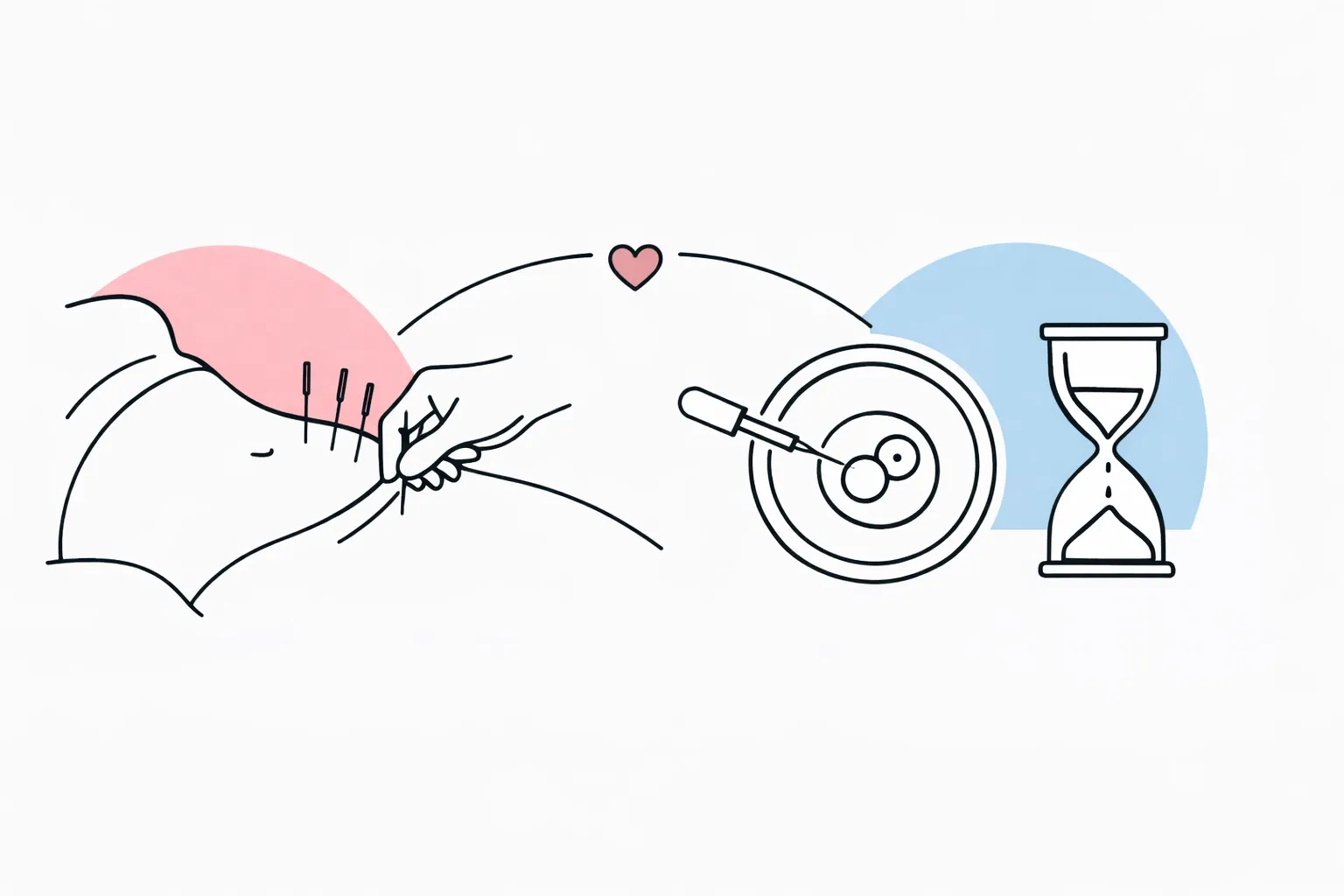
For many people undergoing IVF, the day of the embryo transfer feels like the end of a long, emotional and physically demanding process. You have been through the consultations, the injections and the scans. It is entirely natural to want to do everything you can. This article explains what acupuncture around transfer involves, and what the research does and does not show.
Karla plans every appointment around your clinic’s protocol.
At Nature Heals, we work with many clients across our London clinics in Wandsworth, Notting Hill, and Marylebone who are seeking that extra layer of support. However, one of the most frequent questions we hear is: “When exactly should I have acupuncture?” As it turns out, in the world of fertility and reproductive health, timing is not just a detail. It is everything.
The Evolution of Acupuncture in IVF Support
Acupuncture became popular around IVF after a 2002 trial (often called the Paulus protocol) reported higher pregnancy rates when acupuncture was given just before and just after embryo transfer. For a time this became the standard pattern many clinics followed.
Since then the evidence has been examined many times over, with mixed results. Some reviews have found no clear benefit, and others have reported small differences. At Nature Heals we describe the research honestly rather than claiming more than it shows.

Why Timing is Critical: The Preparation Phase
If you are considering acupuncture after embryo transfer, it is important to look at the weeks and months leading up to that day. Recent research indicates that the most robust benefits of acupuncture are often seen when the treatment begins well before the transfer occurs.
Some reviews have suggested that a course of sessions in the weeks before transfer may be more useful than a single appointment on the day, though the evidence is not consistent. What we can offer is regular, unhurried appointments over that period: rest, time to talk, and continuity of care while you go through treatment.
When you visit us at The New Southfields Clinic in Wandsworth or our other locations, we don’t just look at the day of the transfer. We look at the entire landscape of your fertility journey.
The Role of Acupuncture on the Day of Transfer
Despite the emphasis on preparation, the question of having acupuncture after embryo transfer remains a hot topic. What does the current research say about the day itself?
- Before the transfer: An appointment can be booked in the days before transfer. It is a quiet hour, with time to talk about how you are feeling and treatment planned for you.
- Post-Transfer Acupuncture: Interestingly, some modern research has shown conflicting results regarding the session immediately after the transfer. Some meta-analyses have even suggested that if the pre-transfer session and the long term preparation have been handled correctly, the post-transfer session may not offer significant additional clinical benefits.
At Nature Heals, we tailor our recommendations to the individual. If a client finds the post-transfer session deeply relaxing and it helps them manage the immediate anxiety of the “two week wait,” we may include it. However, we always prioritise the pre-transfer session and the preparatory treatments.

How Does it Actually Work?
You may read detailed explanations of how needles are said to influence implantation.
1. Reducing Uterine Contractions
The uterus is a muscular organ. During an embryo transfer, the physical manipulation of the cervix and the presence of the catheter can sometimes trigger micro-contractions. These contractions may interfere with the embryo’s ability to “settle” and implant. Acupuncture is believed to have a calming effect on the uterine muscle, potentially reducing these contractions in the hours surrounding the transfer.
2. Time to rest
An appointment gives you an hour in a warm, quiet room, away from the demands of the outside world. Many people find that the stillness is the most valuable part of the session during such an intense period.
3. Modulating the Stress Response
IVF is stressful, and many people find the process exhausting. An appointment includes time to talk about how it is going, and simple suggestions for rest and routine if you would like them. Acupuncture is complementary and your clinic, your GP or a counsellor.
Personalised Care at Nature Heals
Every woman’s journey to motherhood is unique, and her acupuncture protocol should be too. Whether you are visiting Karla at our calming Marylebone clinic on Wimpole Street or seeing us in Notting Hill, your treatment will be bespoke.
We understand that the logistics of transfer day can be stressful. Fertility clinics often confirm transfer times at the very last minute. We do our best to remain flexible for our regular patients, ensuring we can provide that critical pre-transfer support when it matters most.

Frequently Asked Questions
What are the risks of acupuncture after embryo transfer?
Acupuncture is generally well tolerated. We use sterile, single-use needles and avoid points that are traditionally avoided in early pregnancy. As with any treatment, individual responses vary and no therapy is without risk, so your practitioner will take a full health history first. Please tell your fertility clinic that you are having acupuncture.
What if I can’t get an appointment exactly 25 minutes before my transfer?
While the Paulus Protocol used a 25 minute window, most practitioners agree that having your session on the day of the transfer, or even the day before, is still highly beneficial. The goal is to reach a state of physiological and emotional balance.
Can I start acupuncture if my transfer is next week?
Yes. You can start at any point, including after transfer.
Does it hurt?
Most patients find fertility acupuncture deeply relaxing. You may feel a slight pinch upon insertion, but many people actually fall asleep during their treatment.
The Nature Heals Approach to IVF Support
Beyond acupuncture, we often discuss nutrition and lifestyle. Some people look at Metabolic Balance® as a structured way to review how they eat, and gentle massage is available for rest and relaxation. Neither is a fertility treatment.
Our clinics in Wandsworth, Notting Hill, and Marylebone are designed to be sanctuaries. We want you to feel heard, supported, and empowered as you move through your IVF cycle.

Summary and Takeaway
If you are going through IVF, acupuncture can offer a quiet hour and continuity of care during a demanding process. It does not change the outcome of your cycle, and your clinic’s plan comes first.
IVF is a journey of a thousand steps. Let acupuncture be the one that helps you walk it with more ease, better balance, and a greater sense of hope. If you are ready to begin your journey with us, you can book now at any of our London locations.
Ready to support your fertility journey?
Whether you are preparing for an IVF cycle or looking for complementary support, our team at Nature Heals offers unhurried appointments at our Wandsworth, Notting Hill and Marylebone clinics.
References
- Westergaard, L. G., et al. (2006). Westergaard, L. G., et al. (2006). Acupuncture on the day of embryo transfer. Fertility and Sterility.
- Hullender Rubin, L. E., et al. (2015). “Impact of whole systems traditional Chinese medicine on in vitro fertilization outcomes.” Reproductive Biomedicine Online.
- Manheimer, E., et al. (2008). “Effects of acupuncture on rates of pregnancy and live birth among women undergoing in vitro fertilisation: systematic review and meta-analysis.” BMJ.
- Paulus, W. E., et al. (2002). “Influence of acupuncture on the pregnancy rate in patients who undergo assisted reproduction therapy.” Fertility and Sterility.