
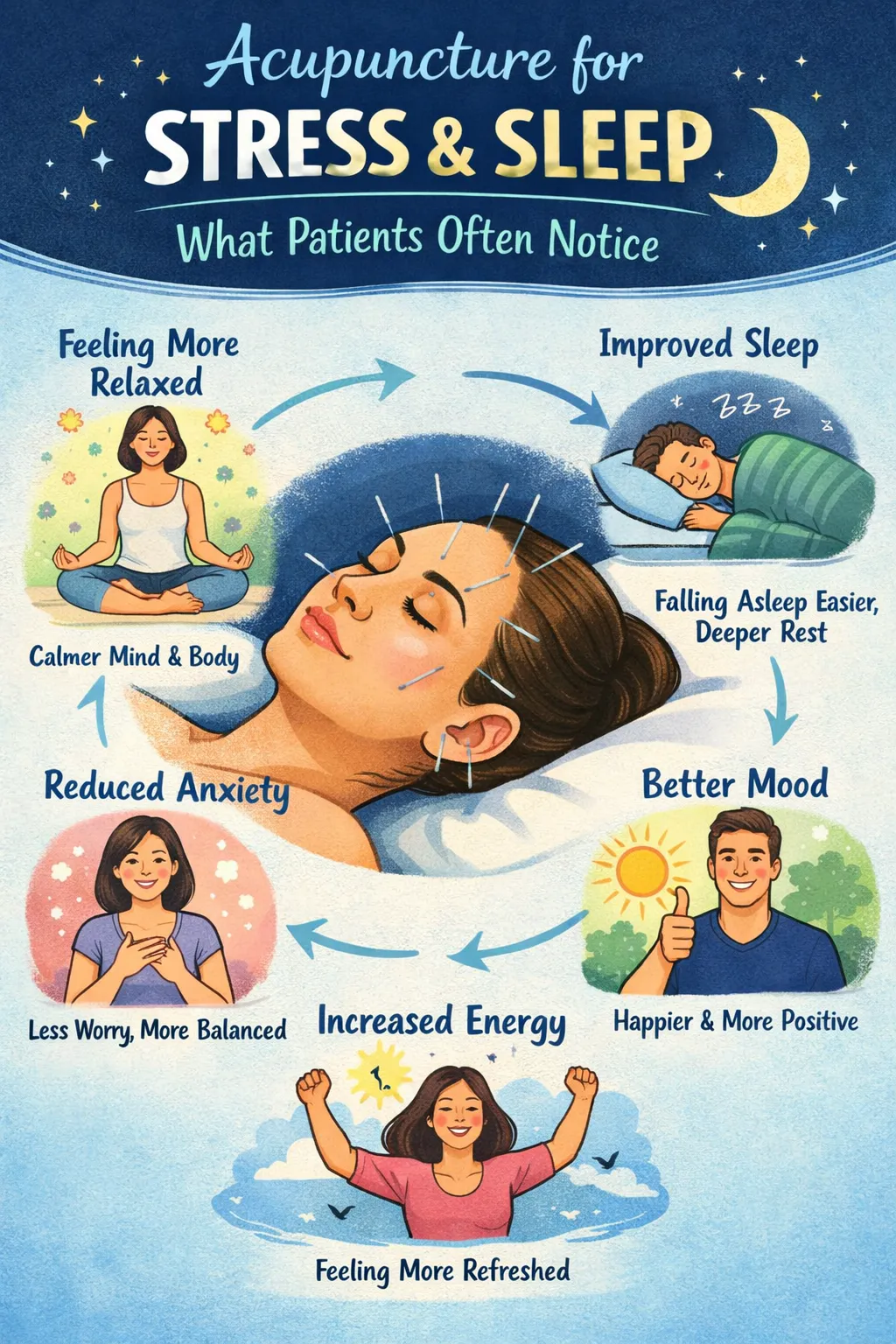
Many people explore acupuncture for stress or sleep difficulties when rest feels unrefreshing, the mind feels constantly active, or tension builds up over time. This guide explains how acupuncture is commonly used as supportive care, what patients often notice during treatment, and when it may or may not be appropriate.
How acupuncture is commonly used for stress and sleep
In clinical practice, acupuncture is often used as supportive care for people who feel tense, restless or unable to switch off. Sessions are planned around you.
Sessions often take into account:
-
- Sleep routines and sleep quality
-
- Stress levels and workload
-
- Energy levels during the day
-
- Physical symptoms such as tension, headaches, or digestive discomfort
Rather than trying to remove stress from your life, appointments offer a regular hour in which to stop.
What patients often notice during treatment
Experiences vary, but patients commonly describe:
-
- A sense of calm or relaxation during sessions
-
- Feeling less mentally “wired” or overstimulated
-
- Changes in how easily they fall asleep
-
- More settled or consistent sleep patterns over time
Some people notice subtle changes early on, others find any change develops gradually. Stress and sleep are influenced by many factors, including workload, health and home life.
As with any form of supportive care, responses are individual and outcomes cannot be promised.
Is acupuncture suitable for everyone with stress or sleep issues?
Acupuncture may be considered by people experiencing stress-related tension, difficulty unwinding, or disrupted sleep patterns. It is often chosen by those seeking a non-pharmacological, supportive approach.
However, it may not be appropriate in all situations. You should speak with a healthcare professional if sleep or stress issues are:
-
- Sudden or severe
-
- Accompanied by significant mood changes
-
- Linked to medical or mental health conditions requiring specialist care
In these cases, acupuncture may be used alongside medical support rather than as a standalone approach.
What to expect at your first acupuncture appointment
An initial appointment usually includes a discussion of sleep habits, stress levels, general health, and any relevant medical history. This helps the practitioner understand how symptoms show up day to day and plan treatment accordingly.
Sessions are typically calm and unhurried. Many patients value the opportunity to pause, lie down, and step away from daily demands, which can itself be a helpful part of the process.
Acupuncture alongside other forms of care
Many people use acupuncture alongside talking therapies, lifestyle adjustments, exercise, or medical care. It is commonly viewed as complementary support rather than a replacement for professional advice or treatment.
Clear communication with other healthcare providers is encouraged where appropriate.
This article is intended for general information only and reflects how acupuncture is used as supportive care in clinical practice.
Considering acupuncture for stress or sleep difficulties?
If stress or sleep difficulties are something you’d like support with, you can book an appointment at one of our London clinics or speak to us to see whether acupuncture may be appropriate for you.
You can read more about how acupuncture is used for stress and sleep on our acupuncture page.
Appointments are available at our Wandsworth, Marylebone and Wandsworth clinics.
References
- No explicit References list on this post.