
Moxibustion: what it involves
Moxibustion has a long history in traditional Chinese medicine. It involves burning a herb, usually mugwort, close to the skin or on the end of a needle, so that the area feels warm. This article explains what it involves and the safety points that matter.
It is a traditional warming technique, offered with care and clear guidance.
What is moxibustion?
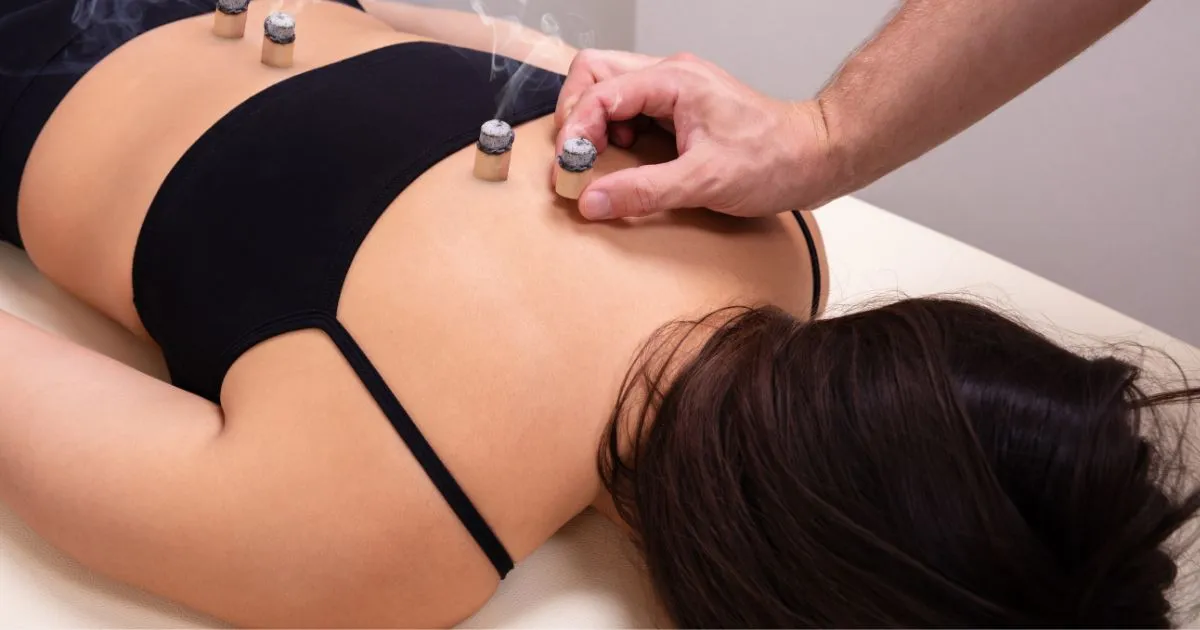
Moxibustion is the application of a dried herb, moxa, to specific points. The herb is formed into a stick or a cone and lit, and the warmth is directed at the point.
The herb is mugwort, Artemisia vulgaris. It burns with a distinctive smell and produces smoke. Practitioners work in ventilated rooms, and smokeless varieties are available.
How it is used
Moxa can be used in several ways: held above the skin, applied to the handle of a needle, or used in a cone on a slice of ginger or salt. Each technique carries a burns risk, and technique matters more than the type of moxa.
In traditional practice, moxibustion is described as warming and tonifying, and it is used in the treatment of cold patterns. That is a traditional framework rather than a claim about immunity.
In traditional theory, moxa is also used preventively, as part of tonification treatment.
It is described traditionally as warming the body and helping with fatigue.
It is traditionally used for digestive complaints, gynaecological conditions and muscular discomfort.
You may see it suggested that moxa affects blood cells.
If you have a condition affecting your immune system, please follow your medical team’s advice and tell them about any complementary treatment.
There is a long tradition of daily moxa at the ST36 point for longevity. It is a traditional story rather than evidence of anything.
Accounts of individuals living to a great age are interesting but tell us nothing about moxibustion. We include the tradition for interest, not as a claim.
Safety
Moxibustion carries a real risk of burns and blistering, and of setting off smoke alarms. It should not be used on areas with reduced sensation, and it should never be left unattended. Smokeless moxa and ventilation reduce the smoke.
As with any complementary therapy, please tell your practitioner about your health conditions and medication. If you are pregnant, ask before using moxa at home, as practice varies and it should not be used without guidance. If you have a cough, fever or shortness of breath, please contact your GP rather than booking a treatment.
If you would like to book an acupuncture appointment and discuss whether moxa is appropriate for you, you can book online.
References
- No explicit References list on this post.