Styles of acupuncture: what the labels mean
If you are curious about acupuncture but confused by the labels, you are not alone. You may hear terms like “neoclassical”, “traditional Chinese”, “five element” or “western medical” acupuncture, and wonder whether the difference matters.
This guide explains the main styles and how appointments work at Nature Heals.
What the labels mean
- Traditional Chinese acupuncture draws on Chinese medical theory, including meridians, pattern diagnosis and the concepts of Qi, yin and yang. Practitioners take pulses and look at the tongue.
- Neoclassical acupuncture keeps the classical channel framework and leans towards a more targeted approach, with fewer needles and a focus on specific points.
- Traditional pattern diagnosis, as a way of individualising treatment
- Individually chosen points, reviewed at each appointment
- Optional additions such as gentle electroacupuncture, moxibustion or cupping where appropriate
At Nature Heals these are not competing camps. Karla combines classical theory with a modern understanding of safe practice, and plans treatment around you rather than a fixed system.
What is the difference between acupuncture and Chinese acupuncture?
In the UK, “acupuncture” can refer to several traditions. “Chinese acupuncture” usually means acupuncture practised within Chinese medical theory. “Western medical acupuncture” is used by some physiotherapists and doctors and is based on a neurophysiological model rather than meridians.
What matters most is the practitioner’s training, their reasoning and the plan you receive, not the label.
Does it work?
The honest answer is that it depends what for, and what “work” means to you. The evidence is stronger for some conditions than others, and much of it is contested.
For whole-person goals such as stress, sleep and fertility, the research is limited and mixed. Many people value the dedicated time and the calm, whether or not it changes their symptoms.
How appointments work at Nature Heals
A first visit includes a detailed consultation covering health history, sleep, stress, menstrual or fertility history and your goals. What follows is planned with you:
If you want to understand how acupuncture fits within our broader care, explore our treatments.
Frequency and course length
Plans are agreed with you. Some common patterns:
- Weekly appointments for a month or two, then review
- Occasional appointments, spread further apart
- Appointments planned around fertility treatment or your cycle
- Appointments planned around your maternity care, in later pregnancy
- A single appointment when you need an hour to yourself
Is every two weeks enough? It can be, if that is what suits you. There is no rule.
Before and after a session
Most people feel relaxed afterwards. A few simple things help:
- Before: eat something light an hour or two beforehand, and arrive hydrated
- After: rest, drink water, keep warm, and note any changes in sleep or mood
- Avoid on the same day: alcohol, a heavy workout, or a long hot bath if you are prone to feeling light-headed
- If you have soreness or a small bruise at a needle site, a cold compress can help
NHS provision
NHS guidance is cautious and focuses on specific indications. NICE does not recommend acupuncture routinely for low back pain, and provision varies between areas. Many people therefore choose private care for convenience and continuity rather than because it is unavailable on the NHS.
Common questions
- Is it all placebo? This is actively debated in the research. Acupuncture trials are difficult to design because people usually know whether they are receiving needles. Some studies report effects beyond sham, others do not.
- Should it work in one session? There is no rule. Some people feel calmer after one appointment; others notice little. We do not promise that a particular number of sessions will change anything.
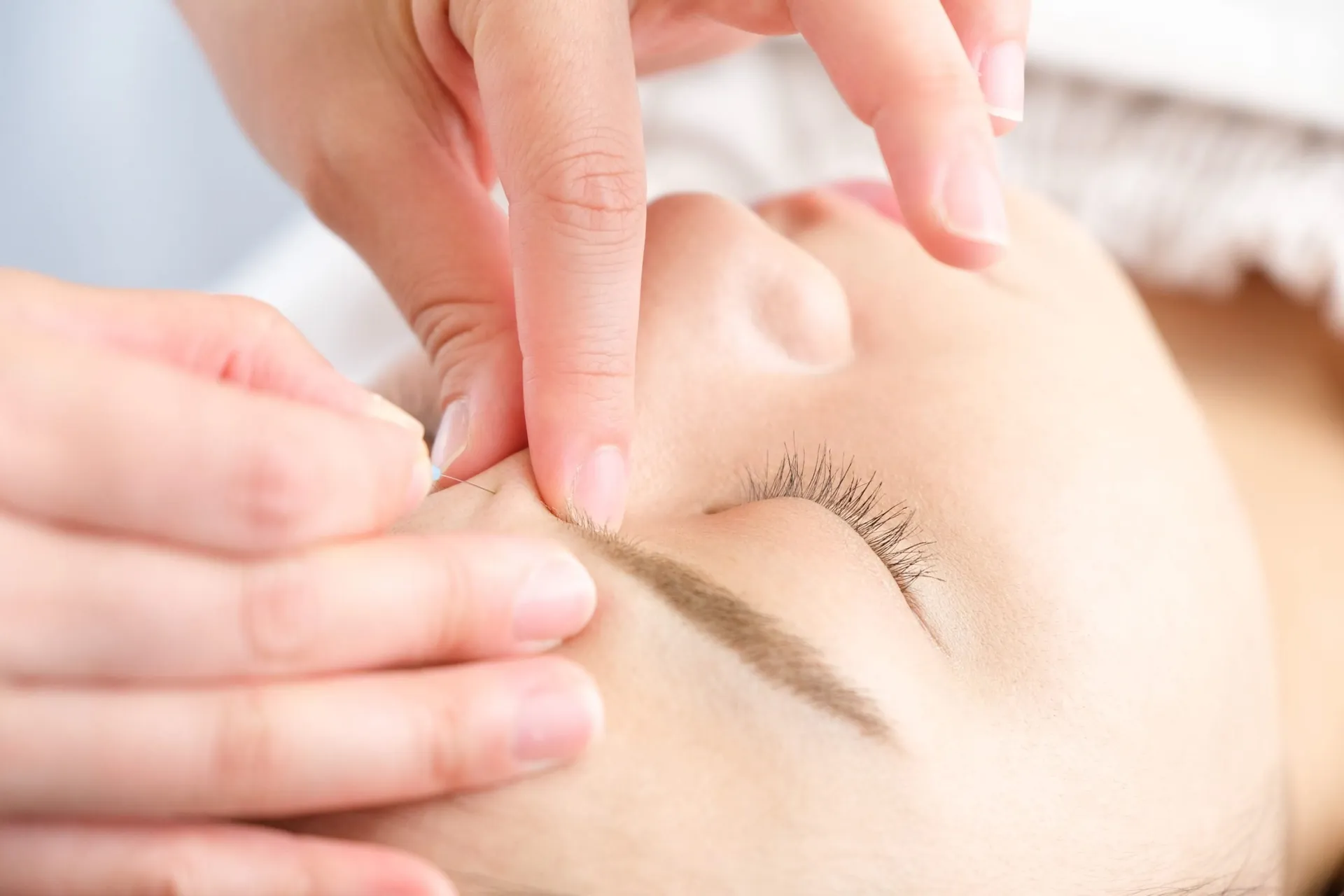
- Do needles have to hurt? No. A dull ache, warmth or tingling is common; sharp pain is not, and you should tell your practitioner.
Quick answers
- What is the difference between acupuncture and Chinese acupuncture?
- “Chinese acupuncture” uses the meridian system and pattern diagnosis from Chinese medicine. Other styles use different frameworks, such as a neurophysiological model. What matters is the practitioner’s training and the plan you agree.
- Does it work?
- The research is mixed, and the strongest evidence is in some pain conditions and in nausea in hospital settings.
- What is the main criticism?
- Critics point to study design difficulties, variation between practitioners, and mixed or unreplicated results. These are fair criticisms and worth taking seriously.
- Does the NHS recommend it?
- The NHS offers cautious, condition-specific guidance, and provision varies by area. Your GP can tell you what is available locally.
- Is every two weeks enough?
- It can be, if it suits you.
- What should I avoid afterwards?
- Alcohol, very intense workouts, and long hot baths that could make you light-headed.
How Karla plans care
Whether you are seeking rest, calmer sleep, or support around fertility or pregnancy, the plan is designed with you at your first appointment and reviewed as you go.
If you are curious about complementary tools that sometimes pair with acupuncture, our overview of cupping explains how it is used.
Choosing what is right for you
If you value a blend of classical theory, careful safe practice and calm, unhurried appointments, we would be glad to welcome you.
Ready to start?
Nature Heals runs clinics in Wandsworth, Marylebone and Notting Hill. If you would like to book, current prices and availability are on the book and prices page.
Ready to start your journey?
If you are curious about how we can support your wellbeing, we would love to welcome you to one of our clinics.
References
- No explicit References list on this post.