
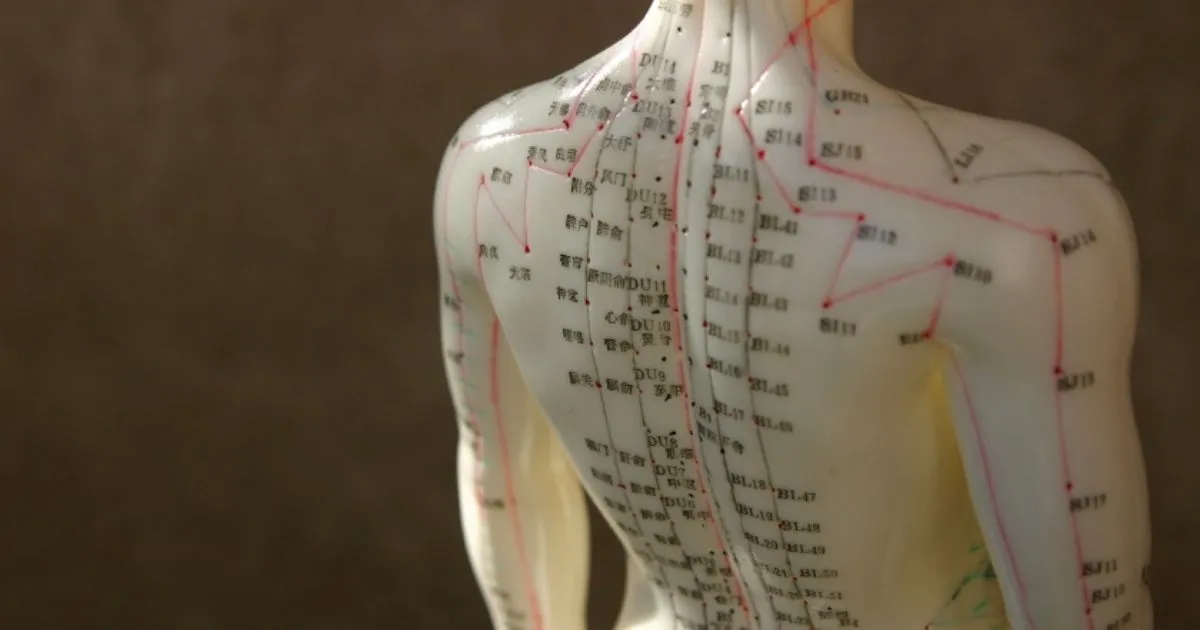
People often ask how acupuncture is thought to work. This article explains what research has explored, where the evidence is stronger and where it is weaker, and why we describe acupuncture as complementary support rather than a treatment for medical conditions.
Acupuncture is complementary care, offered alongside your medical treatment. What follows is a summary of research themes, not a list of things treatment will do for you.
As a practitioner with over 20 years of clinical experience, I find patients are often curious about how acupuncture is explained. Here is an honest summary of what has been studied.
What research has explored
Modern research has examined several possible mechanisms. Each has supporting studies and each has limitations, and the picture is far from settled.
1. Pain signalling
Studies have looked at whether needling affects how the nervous system transmits and interprets pain signals. Some laboratory work suggests changes in pain processing, though findings in humans vary and sham-controlled trials have produced inconsistent results.
2. Nervous system activity
Imaging studies have looked at changes in brain activity during acupuncture. Some have reported differences between real and sham needling; others have found little difference. The research is interesting but does not establish that acupuncture treats any condition.
3. Local tissue and inflammation
There is laboratory research, including animal studies, on local tissue responses and inflammatory pathways. Findings at this stage are exploratory.
4. Circulation
Some small studies have reported changes in local blood flow around needle sites. This has been used to argue that acupuncture could help fertility, but that is a leap the evidence does not support.
What has been studied most
The areas that have attracted the most research funding are:
- Chronic pain: the largest body of research. Results have been debated at length, and NICE does not recommend acupuncture routinely for low back pain.
- Headache and migraine: some trials report fewer headache days; others do not. Please have persistent headaches assessed by your GP.
- Nausea and vomiting: this is one of the areas where evidence is stronger, particularly post-operative and chemotherapy-related nausea, which are managed by hospital teams.
- Stress, sleep and wellbeing: widely studied, with mixed results. We offer acupuncture as complementary support for rest, not as a treatment for anxiety or insomnia.
- Pain: an hour of rest, individually planned treatment and time to talk. Persistent pain is assessed by your GP or physiotherapist, and appointments sit alongside that.
- Migraine: complementary support alongside whatever your GP has advised, with treatment planned around you.
- Nausea: hospital teams use acupuncture in some settings, and Karla will be glad to discuss it with you.
- Fertility: regular, unhurried appointments planned around your clinic’s protocol and how you are feeling.
- Anxiety and sleep: a calm, private hour. If either is affecting your daily life, please speak to your GP, who can advise on further support.
- Nature Medicine (2021) research on acupuncture and anti-inflammatory pathways via the vagus nerve.
- Research summaries from systematic reviews on acupuncture for chronic pain, headache and nausea.
These findings do not mean acupuncture will work for you, and much of the research has been criticised for small samples and variable quality. Your GP can advise on treatment for any specific condition.
How we work
You may see acupuncture recommended for a long list of conditions. Here is how Karla works:
Frequently asked questions
Is acupuncture just a placebo?
This is a genuinely debated question in the research literature. Acupuncture trials are difficult to design because participants usually know whether they are receiving needles. Some studies report effects beyond sham needling; others do not. What we can say is that many people find the experience of a calm appointment valuable, whatever the mechanism.
Does acupuncture hurt?
Acupuncture needles are extremely fine, about the width of a human hair. Most people feel a mild tingling or dull ache, or nothing much at all. Tell your practitioner at any point if you feel uncomfortable and treatment will be adjusted.
How quickly would I notice anything?
Responses vary widely and there is no reliable answer to this. Some people feel calmer after a session; others notice little. We do not recommend a set number of sessions on the basis of expected results; you can book what is useful to you.
Karla Perentin is a licensed acupuncturist and Chinese medicine practitioner with over 20 years of clinical experience, practising at three London clinics.